Lives
Editorially reviewedJane Goodall
Primatologist and conservationist (born 1934)
Jane Goodall is an English primatologist whose long-term study of wild chimpanzees at Gombe Stream, Tanzania, reshaped the study of animal behaviour and made her a global conservation advocate.
Jane Goodall (born 3 April 1934) is an English primatologist and conservationist whose long-term study of chimpanzees at Gombe Stream, Tanzania, transformed the study of animal behaviour. Her observation in 1960 that a chimpanzee made and used a tool overturned the assumption that tool-making was uniquely human .
She began the research without a university degree, at the invitation of the palaeontologist Louis Leakey, and later completed a doctorate in ethology at Cambridge. Over six decades she built the longest continuous study of a wild primate population and became a global advocate for conservation .
This entry covers her early life, the Gombe research, her conservation work, the debates around her methods, and her public role.
Early life and Kenya
Valerie Jane Morris-Goodall was born in London on 3 April 1934 and grew up in Bournemouth. Her father gave her a toy chimpanzee when she was a baby, and she later recalled reading The Story of Doctor Dolittle and Tarzan and deciding that she wanted to live among animals in Africa .
She left school at eighteen, trained as a secretary, and worked in London and then in Kenya, where a schoolfriend's family had a farm. In 1957 she contacted Louis Leakey, then curator of the Coryndon Museum in Nairobi, and was hired as his assistant. Leakey was looking for someone to study wild chimpanzees, and in 1960 he sent her to Gombe, on the shore of Lake Tanganyika .
Chimpanzee research at Gombe
Goodall arrived at Gombe in July 1960 with her mother as a chaperone. The chimpanzees fled from her at first, and it took months of patient approach before they tolerated her presence. She gave them names rather than numbers — David Greybeard, Flo, Fifi — and described their personalities and social bonds .
In October 1960 she watched David Greybeard strip leaves from a twig and use it to fish termites from a mound. Chimpanzees also modified twigs and used leaves as sponges, behaviour that constitutes tool use and, in some cases, tool making. Leakey wrote that the finding forced a redefinition of tool, and perhaps of man .
Her observations accumulated into a detailed record of chimpanzee life: hunting and meat eating, then thought to be a human trait; gestures and calls; the demands of motherhood; and, in 1974, the outbreak of lethal violence between two communities that became known as the Four Year War .
Conservation and activism
By the 1980s Goodall's role had changed. Deforestation, population growth, and poverty around Gombe threatened the chimpanzees' habitat, and a 1986 conference on chimpanzee conservation convinced her that research alone was not enough .
She founded the Jane Goodall Institute in 1977, which supports long-term research, community-centred conservation, and sanctuaries for orphaned chimpanzees. In 1991 she launched Roots & Shoots, a youth programme that now operates in dozens of countries and encourages local environmental projects .
She has spent much of the last three decades travelling and lecturing, and has argued that conservation must address poverty and education as well as wildlife .
Method and criticism
Goodall's early methods were unconventional and attracted criticism. She fed bananas at a provisioning station to keep the chimpanzees near camp, gave them names, and described them in anthropomorphic language, all of which went against the behavioural orthodoxy of the 1960s .
Feeding changed the animals' behaviour and increased aggression, and some primatologists argued that the study was not comparable with observational work elsewhere. She later reduced and then ended provisioning. Her decision to treat chimpanzees as individuals with emotions is now widely accepted, but the debate over anthropomorphism and intervention has not disappeared .
Her scientific output was substantial despite the unconventional start: the Gombe data underpin hundreds of papers on chimpanzee ecology, social structure, and cognition, and the long-term record is among the most valuable in primatology .
Recognition
Goodall received a PhD in ethology from Cambridge in 1965, one of the few students admitted without a first degree. She was appointed a Dame Commander of the Order of the British Empire in 2004 and served as a United Nations Messenger of Peace from 2002. She has received the Kyoto Prize and the Templeton Prize, among many honours .
Her public recognition owes as much to her communication as to her research. Her books, lectures, and documentaries present chimpanzees as individuals and connect their fate to deforestation, climate change, and the wildlife trade .
Legacy
Goodall's most durable contribution is methodological: she demonstrated that a single observer, living among animals over decades, could produce findings that shorter studies could not, and that individual relationships could yield rigorous data. The Gombe study is now a multi-generational research programme with Tanzanian staff in senior roles .
Her conservation legacy is more contested. The institute's community programmes have been praised for linking development with conservation and criticised for depending on donor funding and tourism. Goodall herself has remained optimistic in public, arguing that local action and education are the most reliable routes to change .
She continues to lecture and support the institute's work. The study she began is both a scientific achievement and a record of a habitat under pressure .
The margin
Sources
5 references · checked at publication
- 1Jane Goodall
Wikipedia · 2026
- 2Jane Goodall
Encyclopaedia Britannica · 2026
- 3Gombe Stream National Park
Wikipedia · 2026
- 4Chimpanzee
Wikipedia · 2026
- 5Jane Goodall Institute
Jane Goodall Institute · 2026
Image credits
- Jeekc · CC BY 2.5 · source
Found a broken link or a claim that needs a better source? Use “Report an issue” above. Last checked October 21, 2026.
Provenance
How this entry was made
- Edition
- Seed edition
- Drafted with
- quanshu-seed-editor
- Prompt version
- seed-v1
- Reviewed
- October 21, 2026
This entry is part of QuanShu’s Animalia. Its claims are tied to the sources above; where the record is uncertain, the text says so. It has been checked against its cited sources and is open to correction. Read the editorial policy.
Continue reading
Related entries
Biology
Human
Human beings are the only living members of the genus Homo: a bipedal primate that originated in Africa about 300,000 years ago, now numbers more than eight billion, and shapes the biosphere through language and cumulative culture.
Lives
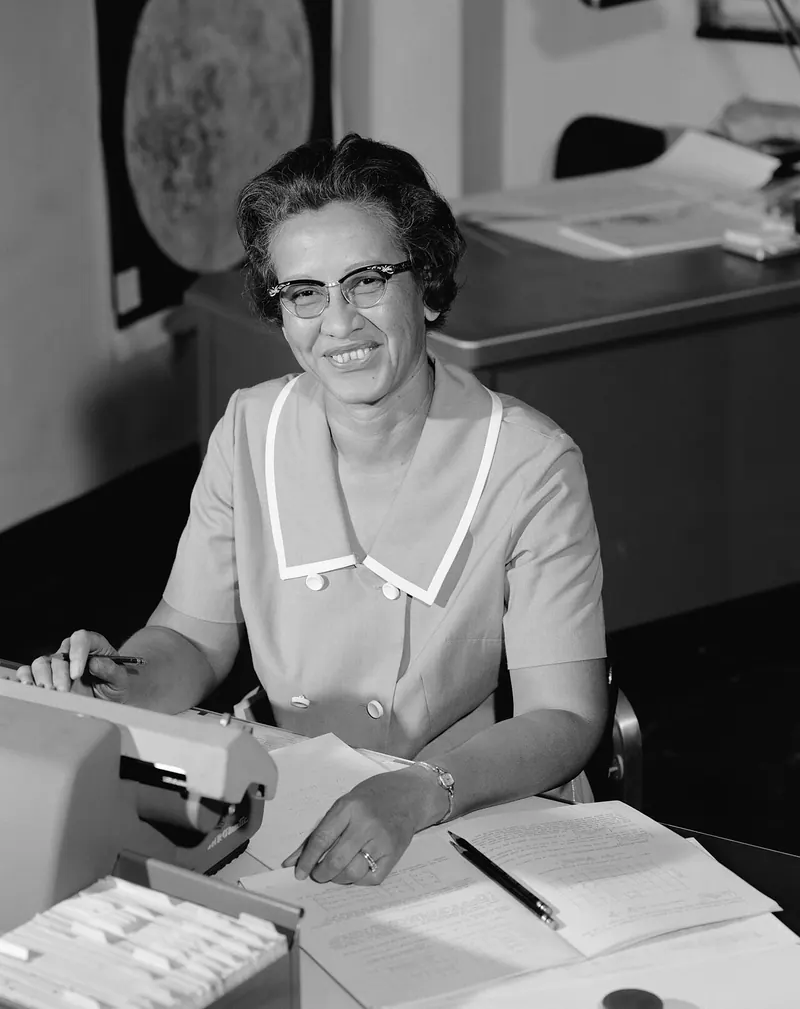
Katherine Johnson
Katherine Johnson was an American mathematician whose hand calculations of orbital trajectories supported NASA's Mercury, Apollo, and Space Shuttle missions and made her a symbol of overlooked contributors.
Lives
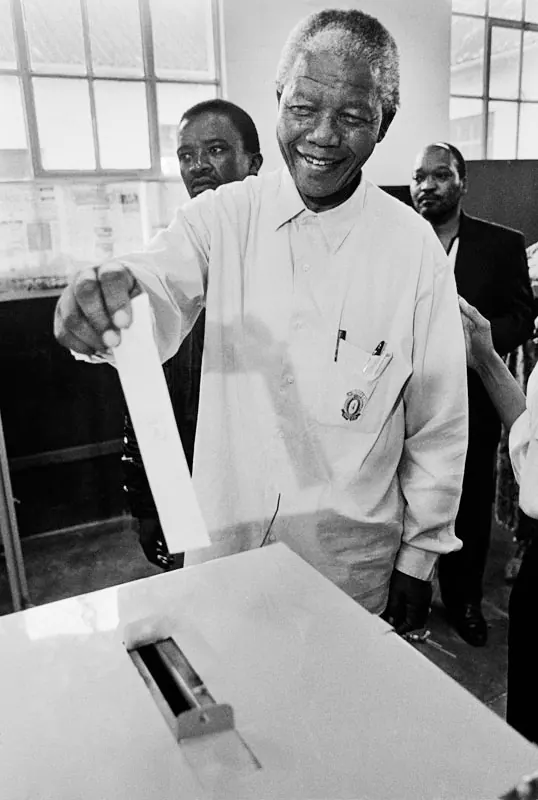
Nelson Mandela
Nelson Mandela was a South African anti-apartheid leader who spent twenty-seven years in prison, shared the 1993 Nobel Peace Prize, and became the country's first Black president in 1994.