Lives
Editorially reviewedLeonardo da Vinci
Painter, engineer, and anatomist (1452–1519)
Leonardo da Vinci was an Italian painter, engineer, and anatomist whose few finished paintings and thousands of notebook pages made him the emblem of Renaissance curiosity and the most versatile artist of his age.
Leonardo da Vinci (15 April 1452 – 2 May 1519) was an Italian painter, draughtsman, engineer, and anatomist, and the most versatile figure of the Italian Renaissance. Fewer than twenty paintings are attributed to him with confidence, yet his surviving drawings and notebooks range across anatomy, mechanics, optics, water, and flight .
Born out of wedlock near Vinci and trained in Florence, he worked for the Sforza court in Milan, for the Florentine republic, and finally for the French crown. His career shows how Renaissance artists moved between workshops, courts, and fortifications, and how drawing served as a common language for art and engineering .
This entry follows his training, paintings, anatomy, engineering, and reputation.
Early life and training
Leonardo was born on 15 April 1452 in Vinci, a small town west of Florence, the illegitimate son of a notary and a peasant woman. He learned reading, writing, and arithmetic but little Latin, and later described himself as a man without letters. At about fourteen he was apprenticed to Andrea del Verrocchio, whose workshop produced sculpture, armour, and paintings.
By 1472 Leonardo was enrolled in the painters' guild of Florence. His earliest surviving works include an angel in Verrocchio's Baptism of Christ, the Annunciation, and the portrait of Ginevra de' Benci. In 1481 he received a commission for the Adoration of the Magi, which he left unfinished when he moved to Milan .
Milan and the Sforza court
Leonardo arrived in Milan around 1482 and spent seventeen years in the service of Ludovico Sforza. He worked as a court engineer and impresario as well as a painter, designing festivals, fortifications, canals, and machines, and he wrote a celebrated letter listing the military devices he could build .
In Milan he painted the first version of the Virgin of the Rocks for the Confraternity of the Immaculate Conception and, between about 1495 and 1498, The Last Supper for the refectory of Santa Maria delle Grazie. The mural was painted on dry plaster rather than fresh, an experiment that caused it to deteriorate within decades. When the French captured Milan in 1499, Ludovico fell and Leonardo left the city .
Painting
Leonardo's painted output is small, in part because he experimented constantly with materials and methods. His signature technique is sfumato, the blending of tones without hard outlines, which gives faces and landscapes their soft transitions. He also used chiaroscuro, the strong contrast of light and shadow, to model form .
The Mona Lisa, begun around 1503, is a portrait of Lisa Gherardini, wife of a Florentine merchant. Leonardo carried it with him for years and never delivered it; it entered the French royal collection and later the Louvre, where it became the most visited painting in the world . The National Gallery in London holds the second version of the Virgin of the Rocks, made for a different patron and differing in composition and colour .
Anatomy and the notebooks
Leonardo filled thousands of pages with drawings and notes, written in mirror script from right to left. Roughly 7,000 pages survive, probably a fraction of what he produced . His anatomical studies were based on dissection, and he recorded muscles, bones, and internal organs with a precision that would not be matched for two centuries .
He is credited with early accurate depictions of the spine's curvature and with detailed studies of the heart's valves, the chambers of the brain, and a fetus in the womb. He intended to publish a treatise on anatomy, but it never appeared, and the notebooks remained scattered among collectors. Their influence on medicine was therefore slight until they were published in the nineteenth and twentieth centuries .
Engineering and observation
Leonardo's engineering interests were practical and speculative at once. He designed canals and locks for the Milanese waterways, advised on fortifications, and sketched machines for lifting, excavating, and pumping. Some designs, including a diving suit and an armoured vehicle, were never built; others reflect careful observation of existing mechanisms .
His study of flight began with birds and continued with models of wings, parachutes, and a helical aerial screw. He also investigated optics, the flow of water, and the origin of fossils found in rock, arguing that they were the remains of living creatures rather than sports of nature. The Vitruvian Man, drawn around 1490, applies the proportions described by the Roman architect Vitruvius to a human figure .
Last years and legacy
After the fall of the Sforzas, Leonardo worked in Florence, briefly for Cesare Borgia as a military engineer, and then in Rome under the patronage of Giuliano de' Medici. In 1516 he accepted an invitation from Francis I of France and moved to the manor of Clos Lucé near Amboise, where he died on 2 May 1519, aged sixty-seven .
He left his notebooks to his pupil Francesco Melzi, and they were dispersed after Melzi's death. Some were cut up, some were sold, and a large group reached the Royal Collection in England. The Treatise on Painting was compiled and published in 1651, and his scientific drawings became widely known only in the nineteenth century. His reputation now rests on the notebooks as much as on the paintings .
The margin
Sources
6 references · checked at publication
- 1Leonardo da Vinci
Wikipedia · 2026
- 2Leonardo da Vinci
Encyclopaedia Britannica · 2026
- 3The Last Supper (Leonardo)
Wikipedia · 2026
- 4Mona Lisa
Wikipedia · 2026
- 5The Virgin of the Rocks
The National Gallery, London · 2026
- 6Vitruvian Man
Wikipedia · 2026
Image credits
- Leonardo da Vinci · Public domain · source
Found a broken link or a claim that needs a better source? Use “Report an issue” above. Last checked October 21, 2026.
Provenance
How this entry was made
- Edition
- Seed edition
- Drafted with
- quanshu-seed-editor
- Prompt version
- seed-v1
- Reviewed
- October 21, 2026
This entry is part of QuanShu’s Animalia. Its claims are tied to the sources above; where the record is uncertain, the text says so. It has been checked against its cited sources and is open to correction. Read the editorial policy.
Continue reading
Related entries
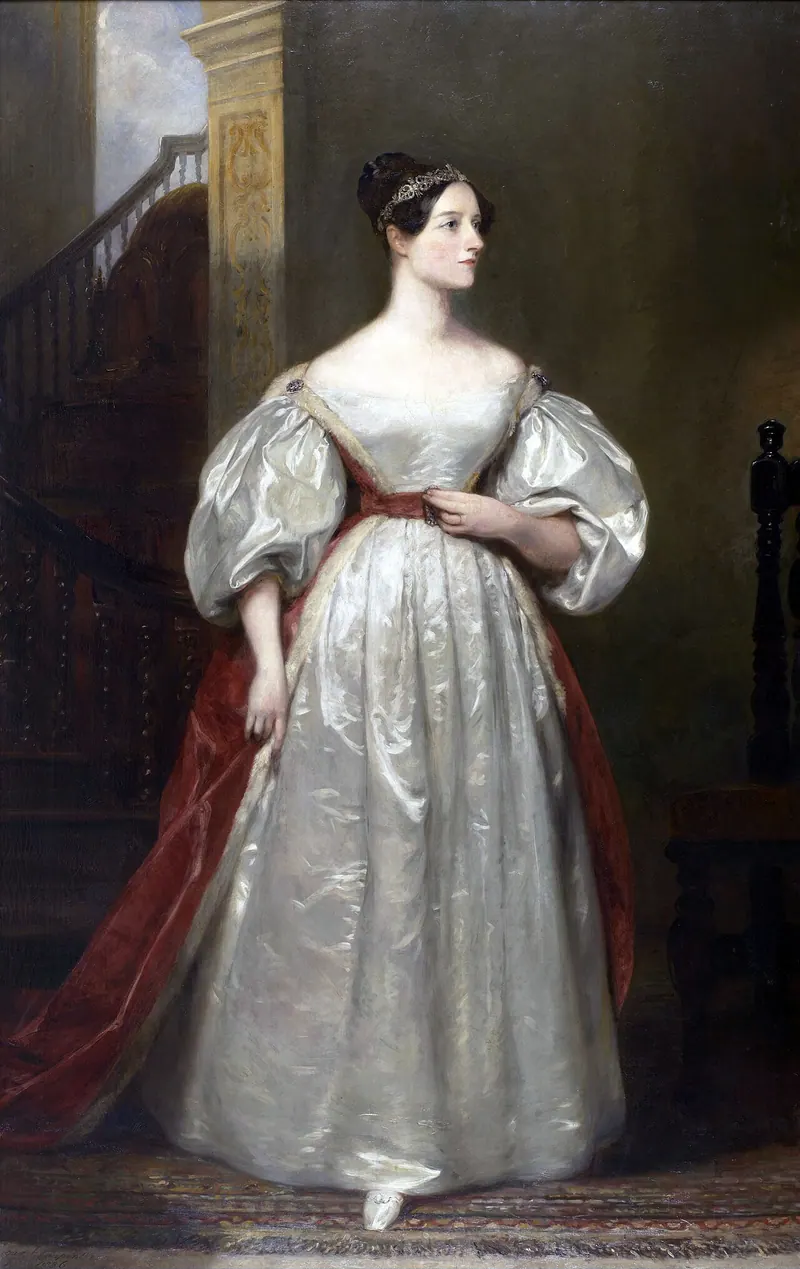
Lives
Ada Lovelace
Ada Lovelace was an English mathematician whose 1843 notes on Charles Babbage's Analytical Engine described an algorithm for a general-purpose machine and are often called the first computer program.
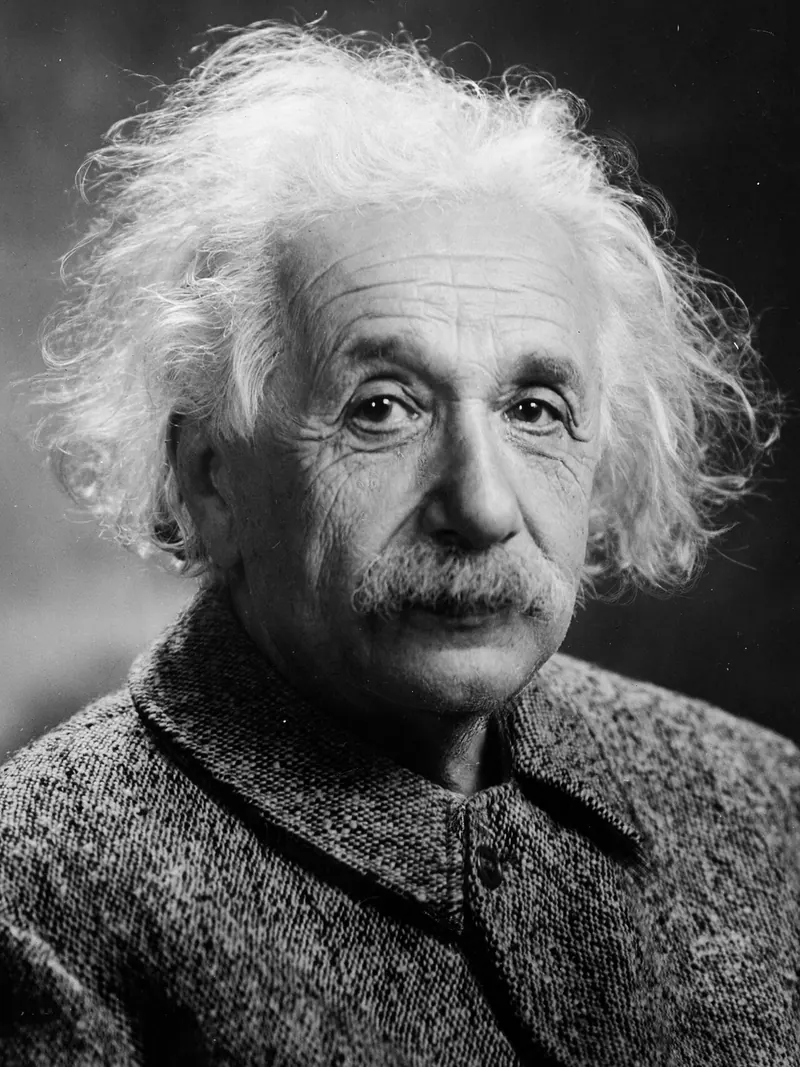
Lives
Albert Einstein
Albert Einstein reshaped physics with special and general relativity and the light quantum, won the 1921 Nobel Prize in Physics, and became the twentieth century's most recognisable scientist.
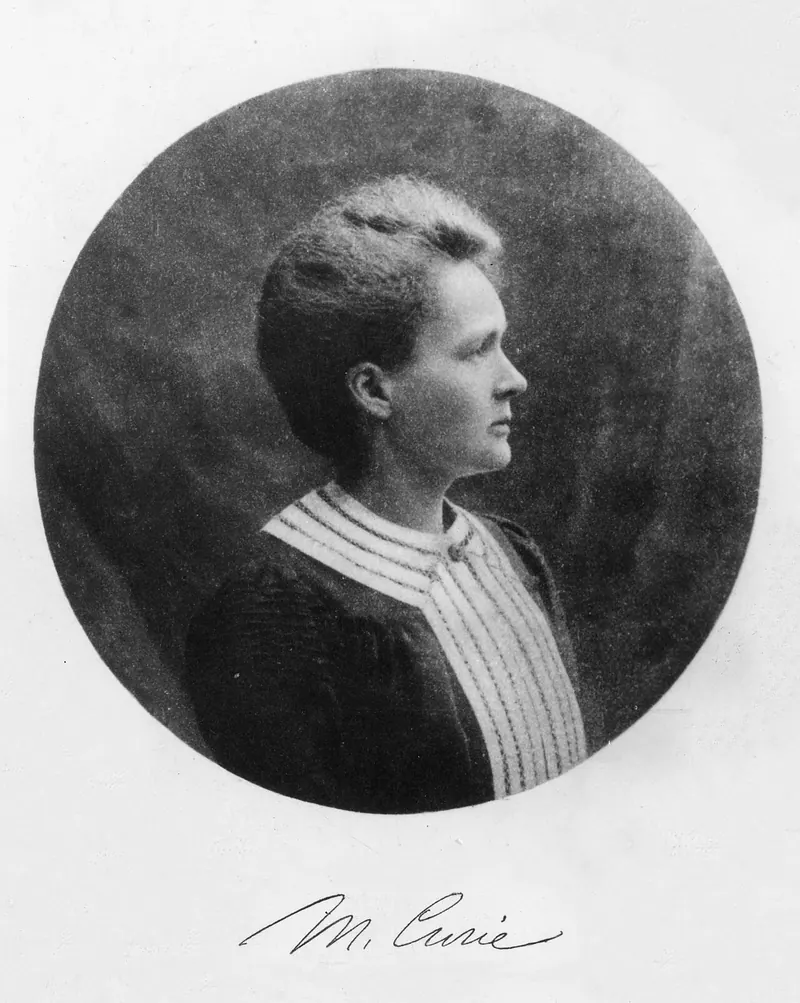
Lives
Marie Curie
Marie Curie pioneered the study of radioactivity, discovered polonium and radium with Pierre Curie, and became the first person to win Nobel Prizes in two different sciences.