Lives
Editorially reviewedAlbert Einstein
Theoretical physicist (1879–1955)
Albert Einstein reshaped physics with special and general relativity and the light quantum, won the 1921 Nobel Prize in Physics, and became the twentieth century's most recognisable scientist.
Albert Einstein (14 March 1879 – 18 April 1955) was a German-born theoretical physicist whose work on relativity and the quantum nature of light replaced the Newtonian framework that had governed physics for two centuries. His name became a synonym for genius .
Einstein published four papers in a single year, 1905, that transformed the subject: on the photoelectric effect, on Brownian motion, on special relativity, and on the equivalence of mass and energy. A decade later he completed general relativity, a theory of gravity as the geometry of spacetime .
He received the Nobel Prize in Physics for 1921, worked in Berlin and then at Princeton, and spoke publicly on pacifism, Zionism, and the dangers of nuclear weapons. He died in 1955, aged seventy-six .
Early life and education
Einstein was born in Ulm on 14 March 1879 into a secular Jewish family. His father and uncle ran an electrical engineering firm, which moved to Munich and later failed after a contract to light the city's streets was lost to larger competitors. The family moved to Italy in 1894, and Einstein, then fifteen, left his Munich gymnasium without a diploma and joined them .
He completed secondary school in Aarau, Switzerland, and entered the Swiss Federal Polytechnic in Zurich in 1896, graduating in 1900 with a teaching diploma. Unable to obtain an academic post, he became a technical expert at the Swiss patent office in Bern in 1902, examining applications for electromagnetic devices. The job left him time to think, and he later called it his lucky charm .
The 1905 papers
In 1905 Einstein published four papers in Annalen der Physik. The first argued that light consists of discrete quanta of energy, an idea that explained the photoelectric effect and challenged the wave theory of light. The second analysed Brownian motion, the random jiggling of particles suspended in a fluid, and derived a relation between their displacement and the number of molecules.
The third introduced special relativity, showing that measurements of length and time depend on the relative motion of observers and that the speed of light is the same in all inertial frames. The fourth, a short consequence of the theory, derived the equivalence of mass and energy, expressed as E = mc². Together the papers established Einstein's reputation and reframed fundamental questions about space, time, and matter .
Relativity
Special relativity dealt with motion at constant speed. Between 1907 and 1915 Einstein extended it to accelerating frames and gravity, guided by the equivalence principle: the effects of a gravitational field are locally indistinguishable from those of acceleration. The result, general relativity, treats gravity not as a force but as the curvature of spacetime caused by mass and energy .
The theory predicted that light passing near the Sun would be deflected by its gravity and that the orbit of Mercury would precess in a way Newtonian mechanics could not explain. A solar eclipse expedition in 1919 measured the deflection and reported agreement, making Einstein internationally famous. The theory has since passed far more precise tests, including the detection of gravitational waves in 2015 .
The Nobel Prize and public fame
The Nobel Prize in Physics for 1921 was awarded to Einstein for his discovery of the law of the photoelectric effect, not for relativity, which the committee regarded as insufficiently established. The prize was announced in 1922, and Einstein had been told he would receive it; he did not travel to Stockholm, and delivered his Nobel lecture in Gothenburg in 1923 .
By then he was the most famous scientist in the world. He used the platform with increasing willingness, writing and speaking on internationalism, disarmament, and the position of Jews in Europe .
Berlin, Princeton, and politics
Einstein moved to Berlin in 1914 as a member of the Prussian Academy of Sciences and director of the Kaiser Wilhelm Institute for Physics. He left Germany in 1932 for a visiting appointment in the United States and did not return after the Nazis came to power; his property was confiscated and his German citizenship revoked. In 1933 he joined the Institute for Advanced Study in Princeton, where he remained until his death .
He was a pacifist who nonetheless signed a 1939 letter, drafted largely by Leo Szilard, warning President Roosevelt that Germany might build an atomic bomb. After the war he campaigned for international control of atomic energy and signed the Russell-Einstein Manifesto in 1955. He declined an offer to become president of Israel in 1952 .
Legacy
Relativity remains the foundation of modern cosmology and of technologies that require precise timing, including satellite navigation. The mass-energy relation explains the energy released in nuclear reactions, and the light quantum became the photon of quantum electrodynamics, a theory Einstein helped inspire but never fully accepted .
His later decades were spent on an unsuccessful search for a unified field theory, and he remained sceptical of the probabilistic interpretation of quantum mechanics. He was awarded the Max Planck Medal in 1929, and element 99 was named einsteinium in 1955. His papers are held by the Hebrew University of Jerusalem .
The margin
Sources
5 references · checked at publication
- 1Albert Einstein
Wikipedia · 2026
- 2Annus mirabilis papers
Wikipedia · 2026
- 3Albert Einstein
Encyclopaedia Britannica · 2026
- 4General relativity
Wikipedia · 2026
- 5Albert Einstein — Nobel Prize in Physics 1921
Nobel Prize Outreach · 2026
Image credits
- Photograph by Orren Jack Turner, Princeton, N.J. Modified with Photoshop by PM_Poon and later by Dantadd. · Public domain · source
Found a broken link or a claim that needs a better source? Use “Report an issue” above. Last checked October 21, 2026.
Provenance
How this entry was made
- Edition
- Seed edition
- Drafted with
- quanshu-seed-editor
- Prompt version
- seed-v1
- Reviewed
- October 21, 2026
This entry is part of QuanShu’s Animalia. Its claims are tied to the sources above; where the record is uncertain, the text says so. It has been checked against its cited sources and is open to correction. Read the editorial policy.
Continue reading
Related entries
Lives
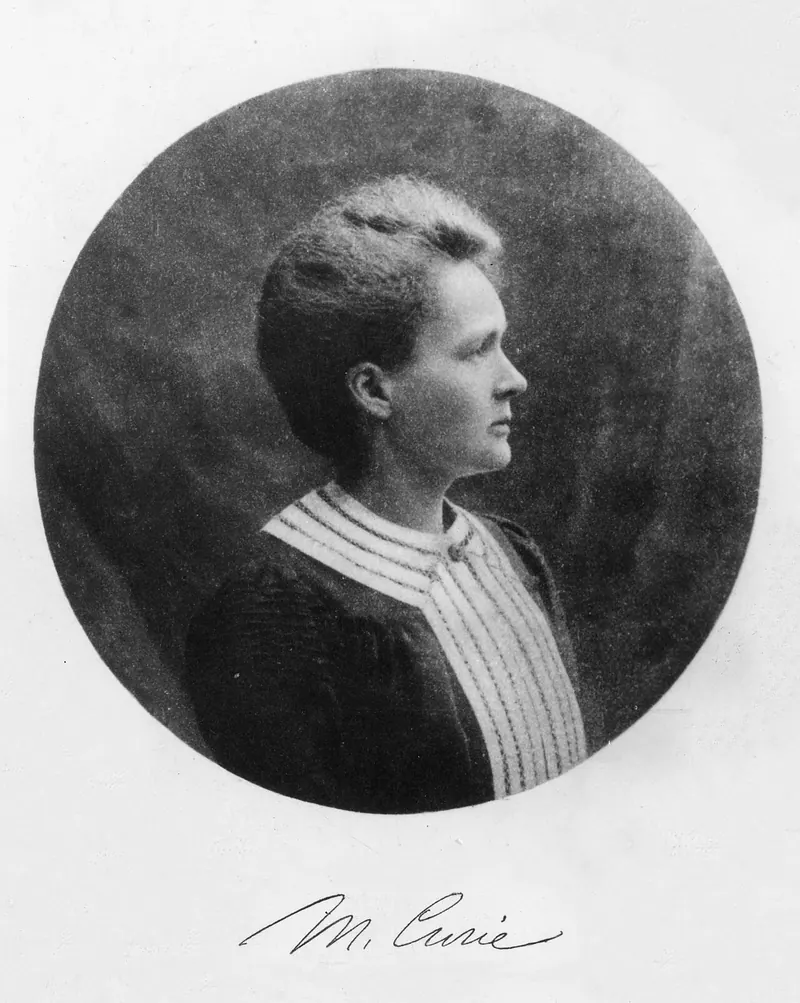
Marie Curie
Marie Curie pioneered the study of radioactivity, discovered polonium and radium with Pierre Curie, and became the first person to win Nobel Prizes in two different sciences.
Lives
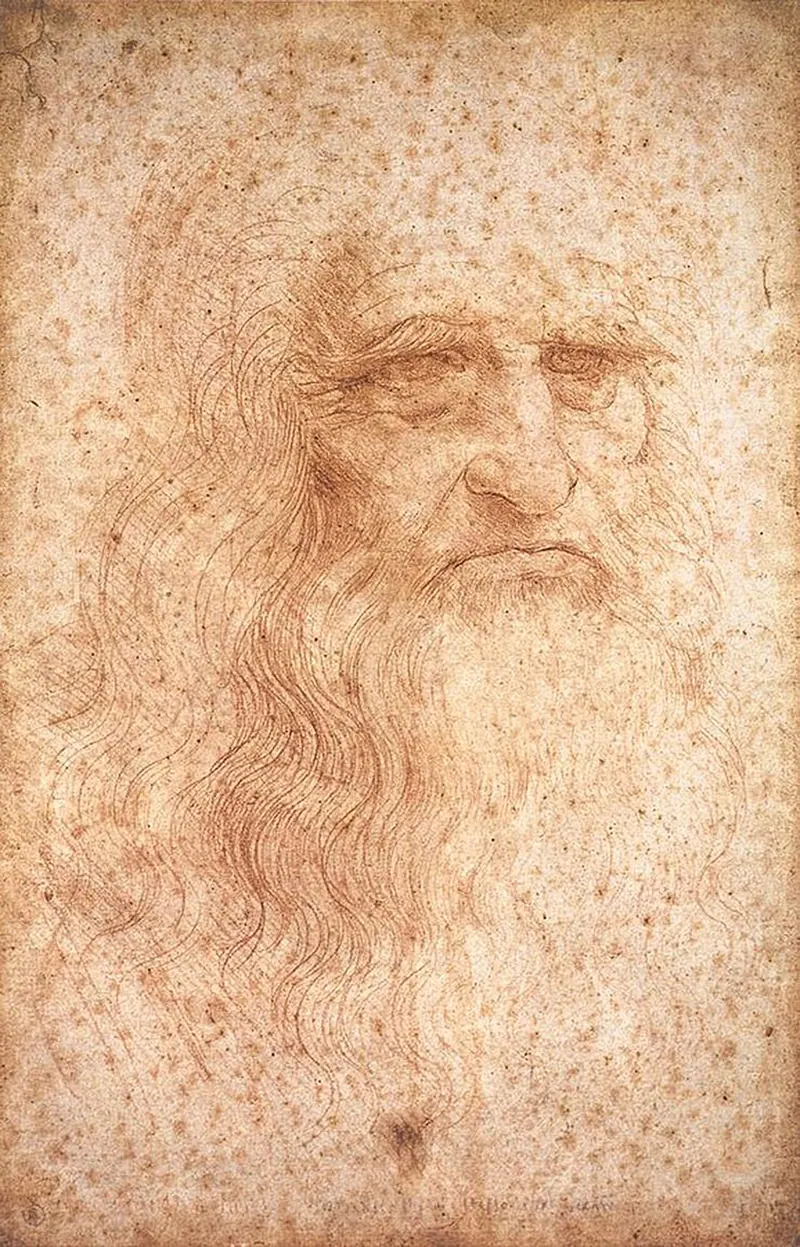
Leonardo da Vinci
Leonardo da Vinci was an Italian painter, engineer, and anatomist whose few finished paintings and thousands of notebook pages made him the emblem of Renaissance curiosity and the most versatile artist of his age.
Lives
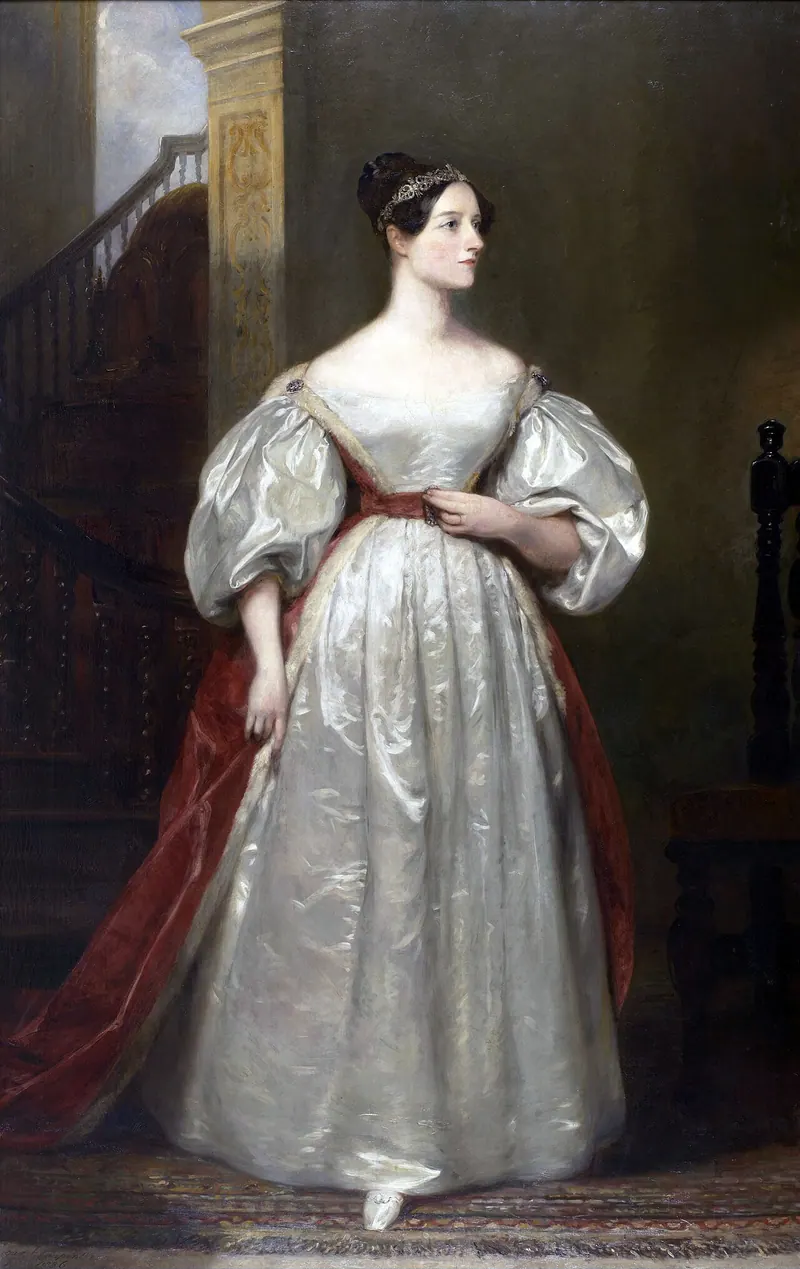
Ada Lovelace
Ada Lovelace was an English mathematician whose 1843 notes on Charles Babbage's Analytical Engine described an algorithm for a general-purpose machine and are often called the first computer program.