Canidae
Editorially reviewedDog
Canis familiaris
The dog is the domesticated descendant of the gray wolf — the oldest companion species, reshaped by millennia of human selection into hundreds of breeds and spread across every human landscape.
The dog is the domesticated descendant of the gray wolf, and the oldest animal companion in human history. No other large carnivore has been so thoroughly reshaped by selection: in a span short enough to overlap with written records, a pack hunter of the northern hemisphere became a herder, a guard, a detector of disease, a guide for the blind, and an animal that reads human faces with unusual skill.
That transformation is the subject of this entry. It covers the dog's place in the canid family, the genetic evidence for where and when domestication happened, the senses and social intelligence that make dogs unusually responsive to people, the extraordinary range of breeds, the size and distribution of the world's dog population, and the cultural record — from Hachikō and Balto to Lassie, Snoopy, and the dogs of anime.
The dog is also a case study in the ethics of domestication. Almost every dog alive depends on people for food, shelter, and medical care, and the species is shaped by choices humans make about breeding, ownership, and the management of free-roaming animals. Those choices are part of the subject, not a footnote to it.
Taxonomy and names
The domestic dog is a subspecies of the gray wolf. Its scientific name is written either as Canis lupus familiaris, which treats dogs as a lineage within the wolf species, or as Canis familiaris, which treats the dog as a species of its own. Both are in current use; the first reflects the close genetic relationship and the fact that dogs and wolves can interbreed and produce fertile offspring .
The word "dog" is old English, and its origin is obscure; the earlier Germanic word was hund, which survives in "hound" and in the scientific name Canidae. Most European languages use a cognate of hund or of Latin canis, and the scientific vocabulary of the family is built from the Latin root.
Dogs belong to the family Canidae, the canids, which also includes wolves, coyotes, jackals, foxes, and the dhole. Within that family the dog sits in the genus Canis, alongside the gray wolf, the coyote, the golden jackal, and the Ethiopian wolf. The classification matters beyond bookkeeping: it explains why dogs, wolves, and coyotes can still exchange genes, and why the boundary between "dog" and "wolf" is a matter of ancestry and behaviour rather than a clean line .
From wolf to dog
Domestication did not happen in a single moment. The oldest generally accepted dog remains are roughly 15,000 years old, and genetic estimates place the separation of dog and wolf lineages somewhere between about 20,000 and 40,000 years ago. The discrepancy is itself informative: the split between populations and the emergence of the familiar domestic dog were probably separated by thousands of years of contact, interbreeding, and gradual change .
Two broad models compete. In the commensal model, wolves were drawn to human camps by food waste, became tamer over generations, and were eventually taken into human society. In the partnership model, hunter-gatherers deliberately adopted and bred wolves or proto-dogs for hunting and guarding. The evidence supports a mixture: selection for reduced fear and increased tolerance of people, followed by deliberate selection once dogs were part of human households .
Ancient DNA has complicated the geography. Mitochondrial genomes from ancient canids pointed to a European origin for domestic dogs , while later nuclear-genome work suggested a single domestication in Asia followed by movement west, and other studies found evidence of multiple contributions and repeated admixture with local wolves . What is now clear is that modern dogs are not the pure descendants of one founding population: they carry a mosaic of lineages, and the earliest European dogs were partly replaced by later arrivals .
Dogs were the first domesticated animal, preceding sheep, goats, cattle, and horses by thousands of years. Their spread tracks human migration: dogs reached the Americas with people, travelled Pacific routes with voyagers, and were carried to Australia, where they became the dingo. In each setting they were shaped by local conditions and local human needs, which is why the oldest dog lineages are not a neat tree but a network of interbreeding populations.
The canine family tree
Canidae contains roughly 37 living species, spread across every continent except Antarctica. The family's branch points are old enough that its members differ sharply in size and habit — from the tiny fennec fox to the gray wolf — but recent enough that many of them can still hybridise.
The genus Canis is the dog's immediate family. The gray wolf is the closest living relative; the coyote is a sister lineage in North America; the golden jackal occupies a similar niche across Eurasia; and the Ethiopian wolf, one of the world's rarest carnivores, is a canid of the highlands. Genetic work has repeatedly redrawn this tree, including the recognition that the African "golden jackal" is a separate species with a history of wolf-like ancestry .
Hybridisation is a recurring theme. Coyote–wolf–dog hybrids are well documented in North America, and wolf–dog hybrids occur wherever the ranges overlap. This matters for conservation, because hybridisation can dilute a wild lineage, and for taxonomy, because it blurs the edges of the species concept. The dog is best understood as a domestic form of the gray wolf that has been separated, reconnected, and reshaped by humans many times .
Within the dog, the deepest division is not between breeds but between ancient and modern lineages. A small number of "ancient" breeds — among them the basenji, the Akita, and the Saluki — retain signatures of old, separated populations, while most modern breeds were fixed only in the last two centuries. The village dogs of Africa, Asia, and Latin America are the largest reservoir of dog genetic diversity, and they are not feral pets but self-sustaining populations with their own long histories .
The result is a family tree with a wild trunk, a domesticated branch, and a recent explosion of small, closed branches created by breed registries. Understanding that shape explains both the dog's adaptability and its vulnerabilities: a breed founded by a handful of animals has a narrow genetic base, whatever its outward variety.
Anatomy and senses
Dogs vary more in size and shape than any other land mammal. The smallest adults weigh under two kilograms; the largest exceed ninety. Height at the shoulder ranges from a few centimetres in toy breeds to over a metre in the great danes and wolfhounds. That range is the product of selection, not of natural variation, and it comes with costs: extreme body shapes are associated with breathing, joint, and eye problems .
The dog's skeleton is built for running and endurance. The shoulder blade is unattached to the spine by bone, which allows a long stride; the wrist and ankle bones are elongated; the teeth are those of a carnivore, with prominent canines and carnassial molars for shearing. The digestive system is more omnivorous than a wolf's, reflecting thousands of years of sharing human food, and genomic studies have found selection on genes involved in starch digestion .
Smell is the dog's most celebrated sense. The olfactory epithelium is large, the olfactory bulb is proportionally bigger than a human's, and dogs can detect odours at concentrations far below human thresholds. They can discriminate between nearly identical scents, follow a trail hours old, and detect medical conditions by odour, though the mechanisms and reliability of medical detection are still being studied.
Hearing extends into ultrasound: dogs respond to frequencies well above the human limit, which is why dog whistles work. Vision is dichromatic — dogs lack the human third cone type — so they see blues and yellows but not reds and greens, and they are especially sensitive to movement and to dim light. Touch matters too: the whiskers, the pads, and the coat all feed a dense sensory system, and dogs are unusually responsive to human touch and voice .
These senses explain much of the dog's working life. A detection dog is not a machine with a nose attached; it is an animal trained to search, indicate, and persist, using smell as its primary channel and human signals as its guide.
Behavior and cognition
Dogs are social animals with a flexible repertoire. Feral and village dogs often live in loose groups, but the pack of popular imagination is a family unit, not an army with a alpha. Research on free-ranging dogs shows fluid associations, shared territories, and cooperative care of young, with conflict resolved more often by display and withdrawal than by serious fighting .
Communication is multimodal. Dogs use tail position and movement, ear and lip posture, piloerection, vocalisations — barks, whines, growls, howls — and scent marking. Barking is unusually frequent in dogs compared with wolves, and its form varies with context, which is one reason dogs are poor subjects for simple "translate the bark" claims.
The most distinctive feature of dog cognition is social: dogs are exceptionally good at reading human communication. They follow pointing gestures, use human gaze to find hidden food, and are sensitive to the difference between a person who is attentive and one who is not. Puppies do some of this without training, which suggests a prepared capacity rather than a purely learned trick. Whether that capacity came from domestication or from the general intelligence of canids is still debated .
Dogs also show something like inequity aversion: in experiments, a dog that sees another rewarded for the same task may refuse to continue. They play, they cache food, they remember where things are, and they seem to track the emotional states of their humans. None of this makes them furry humans, and anthropomorphism remains a real risk in interpretation, but the evidence supports a rich social intelligence shaped by life with people .
The neoteny hypothesis — that dogs are, in effect, juvenile wolves — explains some features, such as the floppy ears and shortened faces of many breeds, but not all of them. Domestication selected for tameness, and tameness brought a suite of correlated changes. The dog's mind is the result of that package plus a lifetime of learning.
Breeds and selection
There are probably more than 400 recognised dog breeds, though the exact number depends on which registry is counting. The Fédération Cynologique Internationale recognises around 360; the American Kennel Club recognises roughly 200. The difference reflects different histories and different rules for recognition, not a disagreement about biology .
Most modern breeds were fixed in the nineteenth century, when dog shows, stud books, and breed clubs created closed populations with written standards. Before that, dogs were grouped by function — herders, hounds, terriers, guard dogs, lap dogs — and the boundaries between them were porous. Breed formation turned those functional types into lineages defined by ancestry and appearance.
Registries classify breeds into groups: herding, hound, working, sporting, terrier, toy, and non-sporting in the AKC system; sheepdogs, sighthounds, scent hounds, and others in the FCI system. The groups are useful shorthand for function and temperament, but they are not biological categories, and many breeds sit awkwardly between them.
Selection has produced remarkable extremes: the dachshund's elongated body, the bulldog's compressed face, the border collie's herding instinct, the saluki's coursing build. Some of those extremes are functional; others are aesthetic and costly. Brachycephalic breeds — those with short muzzles — commonly suffer from obstructed breathing, and several countries and veterinary bodies have raised welfare concerns about breeding for ever more extreme shapes .
Breed structure also creates genetic risk. A breed founded by a small number of animals and closed to outside blood has a narrow gene pool, so inherited disorders can rise in frequency. Responsible breeders use health screening, outcrossing programmes, and genetic testing to manage this, but the fundamental tension between breed purity and genetic health remains unresolved .
Beyond the registered breeds are the landraces and village dogs that make up most of the world's dog population. They are not "mixes" in the modern sense; they are locally adapted populations with long histories, and they hold much of the species' remaining genetic diversity .
Population and distribution
Nobody knows how many dogs there are. There has never been a global census, and estimates vary widely: commonly cited figures range from several hundred million to about a billion, with the true number uncertain by hundreds of millions. What is clear is that dogs live wherever people live, and that most of them are not pets in the wealthy-country sense .
In much of Africa, Asia, and Latin America, the typical dog is free-roaming: it may belong to a household or a neighbourhood, may be fed by several people, and may spend its life outdoors. These village and street dogs are the majority of the world's dogs, and they are the population in which rabies persists. The World Health Organization estimates tens of thousands of human rabies deaths each year, almost all from dog bites, and identifies free-roaming dogs as the principal reservoir .
In high-income countries, dogs are mostly owned, registered, and medically managed. Household surveys in the United States and Europe show dogs in tens of millions of homes, with spending on food, veterinary care, and insurance forming a substantial industry. The difference between these two worlds — owned and free-roaming — shapes everything from vaccination policy to how dogs are perceived in public space.
Distribution is also ecological. Dogs are absent or rare where people are absent, and their density tracks human density. In cities they occupy a narrow niche of streets, parks, and apartments; in rural areas they range more widely and can come into conflict with wildlife. The dingo of Australia and the wild dogs of Africa show what happens when domestic dogs establish free-living populations outside human settlement.
Population structure matters for conservation. Free-roaming dogs can transmit disease to wild carnivores, compete with them, and hybridise with them. Managing that interface — through vaccination, sterilisation, and responsible ownership — is one of the more consequential public-health and conservation problems associated with the species .
Work and companionship
The dog's working life is extraordinarily varied. Herding dogs move sheep and cattle using a modified predatory sequence — stalk, chase, and eye — that has been selected and trained into a cooperative tool. Livestock guardian dogs live with flocks and repel predators by presence and threat rather than by attack. Sled dogs pull loads across snow, and the sled dog's physiology has been studied for its endurance and its ability to work in extreme cold.
Hunting dogs specialise in finding, flushing, pointing, retrieving, or pursuing game, and the vocabulary of those roles survives in breed names and breed groups. Detection dogs work in customs, security, conservation, and medicine: they search for drugs, explosives, invasive species, and disease, and their noses are used where instruments are slow or impractical. Assistance dogs guide people with visual impairments, alert deaf owners to sounds, retrieve objects for people with mobility impairments, and support people with epilepsy or diabetes.
The therapeutic role is real but often overstated. Dogs can reduce stress and loneliness in hospitals, care homes, and schools, and animal-assisted interventions are widely used; the evidence for specific clinical benefits is mixed and depends heavily on the programme. What is not in doubt is the everyday companionship that is, for most owners, the point of the relationship.
Competitive sports — agility, obedience, flyball, field trials, herding trials, IPO — formalise the working partnership and give owners a structured way to exercise and train. They also illustrate how much of dog behaviour is cooperative: a dog that runs an agility course is responding to continuous human cues at speed, a performance that depends on both training and the animal's willingness to attend.
Working dogs raise their own ethical questions. Detection and military dogs are exposed to danger; assistance dogs are bred and trained intensively; and all working dogs eventually retire and need homes. Good programmes plan for retirement from the start, and the growing literature on working-dog welfare treats the animal as a partner with interests, not as equipment .
Health and lifespan
A typical dog lives between about ten and thirteen years, though the range is wide. Small breeds often reach fifteen or more; giant breeds may be old at eight. The pattern is well established and counter-intuitive: larger dogs age faster, and the reasons are still being investigated .
Common health problems fall into a few groups. Orthopaedic conditions — hip and elbow dysplasia, cruciate ligament rupture, arthritis — are frequent, especially in large and active breeds. Dental disease is extremely common and often untreated. Obesity is a growing problem in wealthy countries and contributes to diabetes, joint disease, and shortened life. Parasites, skin disease, ear infections, and gastrointestinal illness account for a large share of veterinary visits.
Infectious disease is largely preventable. Vaccination against distemper, parvovirus, hepatitis, and rabies is standard in countries where those diseases circulate, and rabies vaccination is the cornerstone of public-health control. Heartworm, fleas, and ticks are managed with preventives. The veterinary manual's guidance is consistent: regular examination, vaccination, parasite control, dental care, and weight management do more for most dogs than any single intervention .
Brachycephalic breeds deserve separate mention. The shortened skull that gives bulldogs, pugs, and French bulldogs their characteristic faces also narrows the airway, and many affected dogs struggle to breathe, exercise, or regulate temperature. Surgical correction can help, but the underlying problem is created by selection, and several veterinary organisations now recommend breeding away from extreme brachycephaly .
Cancer is a leading cause of death in older dogs, and treatment options have expanded considerably. Chronic conditions — kidney disease, heart disease, epilepsy, diabetes — are managed rather than cured. The practical implication is that a long-lived dog is usually the product of good genetics, sensible weight, preventive care, and timely veterinary attention.
At the end of life, euthanasia is a routine and difficult part of veterinary practice. The ethics of that decision are discussed in the entry on animal welfare, but the standard is consistent: the animal's quality of life, not the owner's convenience, is the measure .
Dogs in culture
Dogs appear in the oldest stories humans tell. In Egyptian religion, Anubis is jackal-headed and guards the dead; in Greek myth, Cerberus guards the underworld and Argos, Odysseus's old dog, is the only creature who recognises the wanderer on his return. In the Mahabharata, dogs accompany the exiled Pandavas, and Yudhishthira refuses to enter heaven without one. These are not decorative animals: they are figures with moral weight .
The modern cultural record is even richer. Hachikō, an Akita in Tokyo, waited at Shibuya Station for his owner for nearly a decade after the man's death in 1925, and became a national symbol of loyalty; his statue is one of the most visited meeting points in the city . Balto, a sled dog, led a team through a blizzard in the 1925 serum run to Nome, and his story is commemorated in films and in a statue in Central Park .
Cinema and television made dogs into characters. Lassie, a rough collie, starred in films and a long-running television series and became shorthand for the loyal dog who fetches help. Rin Tin Tin, a German shepherd, was one of the biggest stars of early Hollywood. In comics, Snoopy — Charlie Brown's beagle — became one of the most recognisable characters of the twentieth century, and the Schulz Museum documents his cultural reach .
Japan's manga and anime tradition has its own dog canon. Silver Fang (Ginga: Nagareboshi Gin) is a long-running story about bear-hunting dogs, and its sequel Ginga Densetsu Weed extended the saga; the series is credited with popularising the Akita and Kishu breeds among a generation of readers . Dogs also appear as partners and mascots across anime and games, from companion animals to team members.
The internet added a new layer. Dog photographs were among the first viral images, and the vocabulary of online culture — "doggo", "pupper", "underdog" — is now part of ordinary English. Dogs are also commercial symbols: the RCA Victor dog, the Target bull terrier, and countless insurance and food brands use dogs to signal loyalty, trust, and domesticity .
The cultural record matters for an encyclopedia because it explains the animal's place in human life. Dogs are not only a biological species; they are a shared cultural object, and the meanings attached to them vary by country, class, and century.
Ethics and conservation
The dog's dependence on people creates obligations. Breeding for extreme conformations, puppy farming, abandonment, and the management of free-roaming populations are all welfare problems with practical solutions, and the solutions are usually about human behaviour rather than about dogs.
Breed welfare is the clearest case. Selection for a flat face, a very long back, or a very large head can produce animals that cannot breathe, move, or give birth without help. Veterinary bodies in several countries now publish breeding guidance, and some jurisdictions restrict the sale of severely affected breeds. The direction of travel is away from extremes and towards functional conformation .
Free-roaming dogs pose a harder problem. They are a public-health risk where rabies circulates, a conservation risk where they encounter wildlife, and a welfare problem in their own right. The evidence favours vaccination and sterilisation programmes over culling, which is ineffective where populations are replenished and raises its own welfare and ethical issues. The World Health Organization's rabies strategy is built on mass dog vaccination, not on extermination .
Conservation conflicts are real. Free-roaming dogs can prey on endangered species, transmit pathogens to wild carnivores, and hybridise with them. The dingo is a special case: a long-established free-living dog population that is both a native predator and a management problem. There are no easy answers, but the principle is clear — dogs are a human-created problem, and the solutions have to involve people.
Finally, there is the question of what we owe individual dogs. Working dogs, laboratory dogs, and abandoned dogs are all animals with interests. The growing field of animal welfare asks not whether dogs are useful, but whether the conditions under which they live are acceptable. For an encyclopedia, that question belongs alongside the anatomy, the genetics, and the cultural record .
See also
Gray wolf · Domestication · Canidae · Dog breeds · Animal welfare
The margin
Sources
16 references · checked at publication
- 1Dog
Encyclopaedia Britannica · 2026
- 2Genome-wide SNP and haplotype analyses reveal a rich history underlying dog domestication
Nature · vonHoldt, B. M. et al. · 2010
- 3Complete mitochondrial genomes of ancient canids suggest a European origin of domestic dogs
Science · Thalmann, O. et al. · 2013
- 4Origins and genetic legacy of prehistoric dogs
Science · Bergström, A. et al. · 2020
- 5Genome sequencing highlights the dynamic early history of dogs
PLOS Genetics · Freedman, A. H. et al. · 2014
- 6The canine family tree and the genomics of Canis
Nature · 2020
- 7Dog breeds
American Kennel Club · 2026
- 8Fédération Cynologique Internationale
FCI · 2026
- 9Dog owners
MSD Veterinary Manual · 2026
- 10Rabies
World Health Organization · 2025
- 11Dog care
American Society for the Prevention of Cruelty to Animals · 2026
- 12Dog
Wikipedia · 2026
- 13Hachikō
Wikipedia · 2026
- 14Balto
Wikipedia · 2026
- 15Charles M. Schulz Museum
Charles M. Schulz Museum and Research Center · 2026
- 16Silver Fang
Wikipedia · 2026
Image credits
- M. Rehemtulla · CC BY 2.0 · source
Found a broken link or a claim that needs a better source? Use “Report an issue” above. Last checked October 21, 2026.
Provenance
How this entry was made
- Edition
- Seed edition
- Drafted with
- quanshu-seed-editor
- Prompt version
- seed-v1
- Reviewed
- October 21, 2026
This entry is part of QuanShu’s Animalia. Its claims are tied to the sources above; where the record is uncertain, the text says so. It has been checked against its cited sources and is open to correction. Read the editorial policy.
Continue reading
Related entries
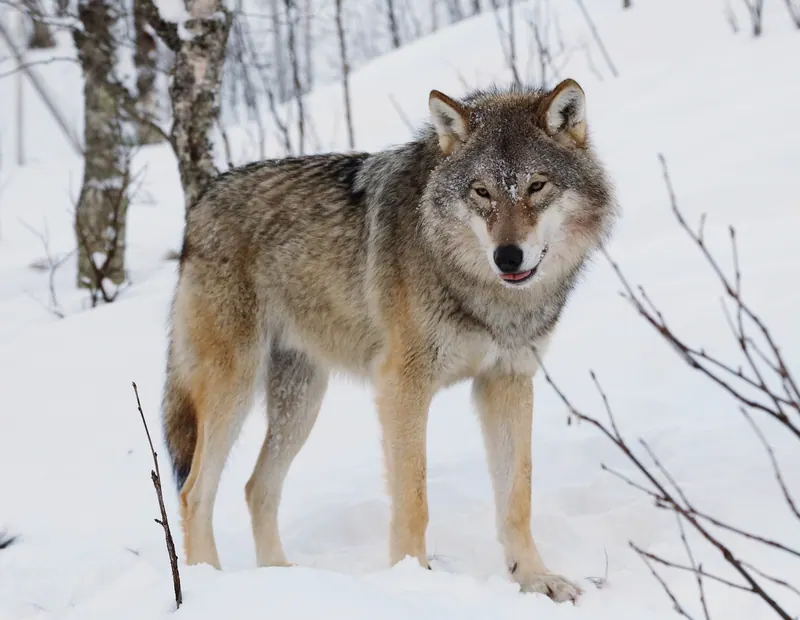
Canidae
Gray Wolf
The gray wolf is the largest wild canid, a pack-hunting carnivore of the Northern Hemisphere whose range and reputation have been reshaped by people.
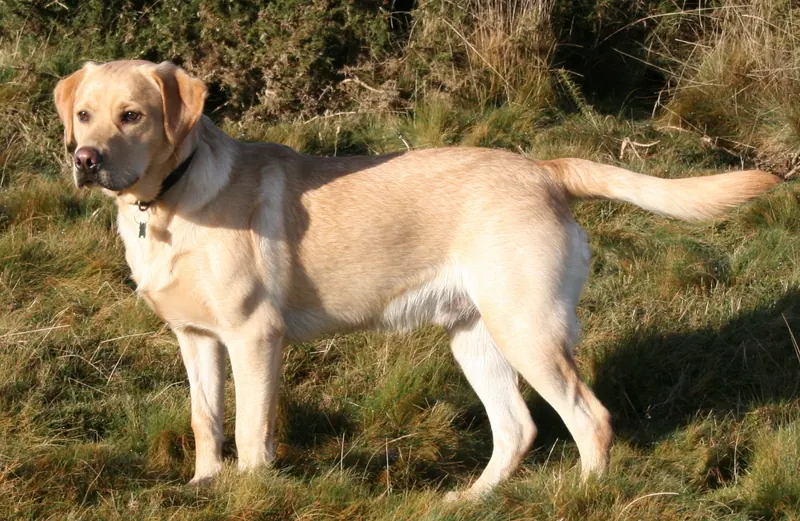
Dog breeds
Labrador Retriever
The Labrador Retriever is a medium-to-large gundog from the North Atlantic, bred to retrieve in cold water and ranked among the most popular breeds in the United States and Britain.
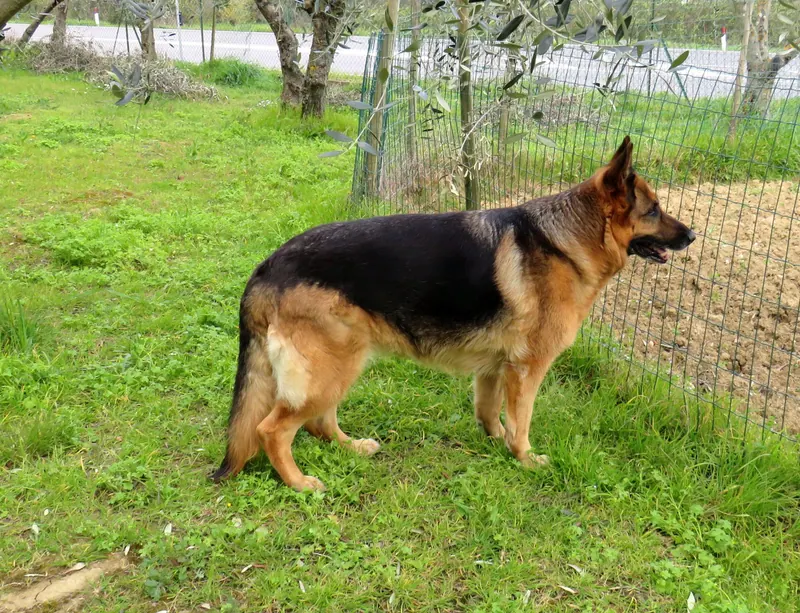
Dog breeds
German Shepherd Dog
The German Shepherd Dog is a large herding breed from Germany, built for work and prized for its trainability — and it needs a job to stay sound in body and mind.