Lives
Editorially reviewedIbn Battuta
Traveler and jurist (1304–1368/69)
Ibn Battuta was a Moroccan scholar of Islamic law who travelled for about thirty years across Africa, the Middle East, Central Asia, India, and China, and whose Rihla is a key source for the medieval world.
Ibn Battuta (1304–1368/69) was a Moroccan scholar of Islamic law who travelled for about thirty years across North and West Africa, the Middle East, Central Asia, India, Southeast Asia, and China. His account of those journeys, the Rihla, is one of the most detailed travel narratives of the medieval world .
He was born in Tangier into a family of judges and left at twenty-one on the pilgrimage to Mecca. Rather than return home, he took employment as a legal scholar wherever he went, serving rulers in Delhi and the Maldives and travelling with caravans, pilgrim fleets, and royal embassies .
The Rihla was dictated late in life and is shaped by literary convention as well as memory. Historians use it as a source while treating its numbers and anecdotes with caution.
Tangier and the pilgrimage
Ibn Battuta was born in Tangier on 24 February 1304, in the Marinid Sultanate, into a family of qadis, scholars qualified to judge according to Islamic law. He studied the Maliki school of jurisprudence and, at twenty-one, set out on the hajj, the pilgrimage to Mecca that able Muslims are expected to make once in their lives .
His route took him east through Tunis, Alexandria, Cairo, and Damascus, where he studied with leading scholars before joining a caravan for Mecca. He completed the pilgrimage, but instead of returning to Morocco he continued into Iraq and Persia. The decision turned a religious obligation into a career: as a literate jurist he could find patronage at almost any court .
The eastern journeys
From Mecca he travelled to Yemen and the Red Sea coast, then down the East African coast as far as Kilwa, in present-day Tanzania, a Swahili trading city of stone houses and coral mosques. He recorded its prosperity and its Indian Ocean trade .
He returned north through Oman and the Persian Gulf, visited Hormuz, and crossed Anatolia, then ruled by a patchwork of Turkish emirates. In 1332 he reached the territory of the Golden Horde, the Mongol state that controlled the steppe north of the Black Sea. He also spent time in Aleppo and Damascus, where he was living when the Black Death reached the city in 1348 .
The Golden Horde and Constantinople
At the court of the Golden Horde's ruler, Muhammad Uzbeg Khan, Ibn Battuta encountered a Mongol polity that had converted to Islam but retained steppe customs. He married into the ruler's entourage, a pattern repeated throughout his travels, and joined a diplomatic mission carrying a Mongol princess to her Byzantine husband .
He reached Constantinople in 1332 and was received by the emperor Andronikos III. His description of the city — its churches, markets, and ceremonies — is one of the few eyewitness accounts by a Muslim traveller of the medieval Byzantine capital. He stayed about a month, then returned east across the steppe and Central Asia toward India .
India and the Indian Ocean
In 1333 Ibn Battuta reached Delhi, capital of the Delhi Sultanate under Muhammad bin Tughluq, a ruler famous for his learning and his erratic policies. He was appointed a qadi and given a stipend, and he remained in Delhi for several years, surviving the political purges that marked the reign .
In 1341 he was sent as an envoy to China. The embassy was wrecked off Calicut, on the Malabar coast, and he continued on his own through the Maldives, where he served as a judge, and to Sri Lanka, Bengal, and Sumatra. By about 1345 he had reached China, probably by sea, and he describes its ports, its paper money, and its manufactures .
Return and the Rihla
On the way home he crossed the Sahara to Mali, describing the court of Mansa Sulayman and the gold trade . He reached Fez, the Marinid capital, in 1354, and the sultan commissioned a court secretary, Ibn Juzayy, to record his account; the resulting book — usually called the Rihla, or journey — was completed in 1355–56 .
The Rihla is not a diary. It was composed years after the events, from memory, notes, and the works of earlier travellers, and it follows the conventions of Arabic travel literature. It describes cities, rulers, legal customs, food, and marvels, and includes stories that are plainly borrowed or embroidered .
He spent his last years in Fez as a judge and died in 1368 or 1369 .
Reliability and legacy
Modern historians treat the Rihla as valuable but uneven. Its topographical and institutional details often match other sources. Its chronology is sometimes confused, its distances are often exaggerated, and some passages reproduce earlier authors without acknowledgement .
The estimate that he covered about 120,000 km is probably too high, but the range of his travels is not. He was not an explorer in the modern sense: he followed established routes, stayed with scholars and officials, and relied on the hospitality and patronage networks of the Islamic world .
The Rihla was not widely known in Europe until the nineteenth century, when it was edited and translated. It now serves as a key source for the social and commercial history of the fourteenth-century Islamic world .
The margin
Sources
6 references · checked at publication
- 1Ibn Battuta
Wikipedia · 2026
- 2Ibn Battuta
Encyclopaedia Britannica · 2026
- 3Rihla
Wikipedia · 2026
- 4Delhi Sultanate
Wikipedia · 2026
- 5Mali Empire
Wikipedia · 2026
- 6Tangier
Wikipedia · 2026
Found a broken link or a claim that needs a better source? Use “Report an issue” above. Last checked October 21, 2026.
Provenance
How this entry was made
- Edition
- Seed edition
- Drafted with
- quanshu-seed-editor
- Prompt version
- seed-v1
- Reviewed
- October 21, 2026
This entry is part of QuanShu’s Animalia. Its claims are tied to the sources above; where the record is uncertain, the text says so. It has been checked against its cited sources and is open to correction. Read the editorial policy.
Continue reading
Related entries
Lives
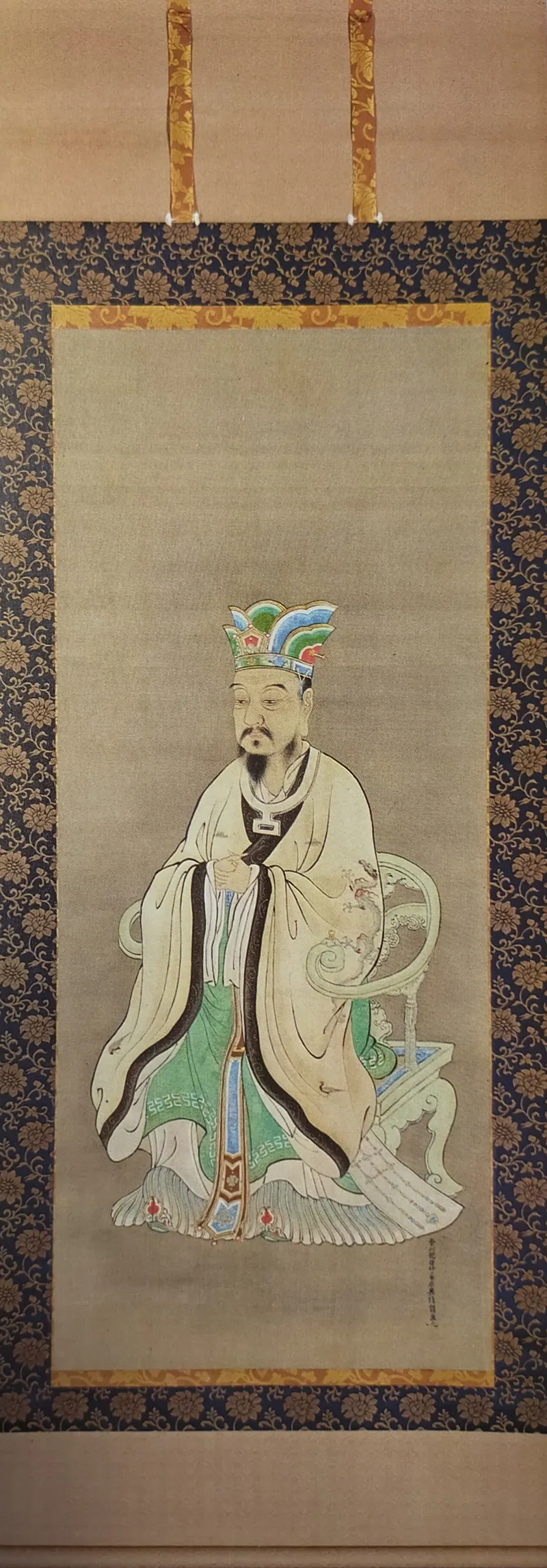
Confucius
Confucius was a Chinese teacher and political thinker of the Spring and Autumn period whose sayings, collected in the Analects, shaped the ethics, education, and government of East Asia for more than two millennia.
Lives
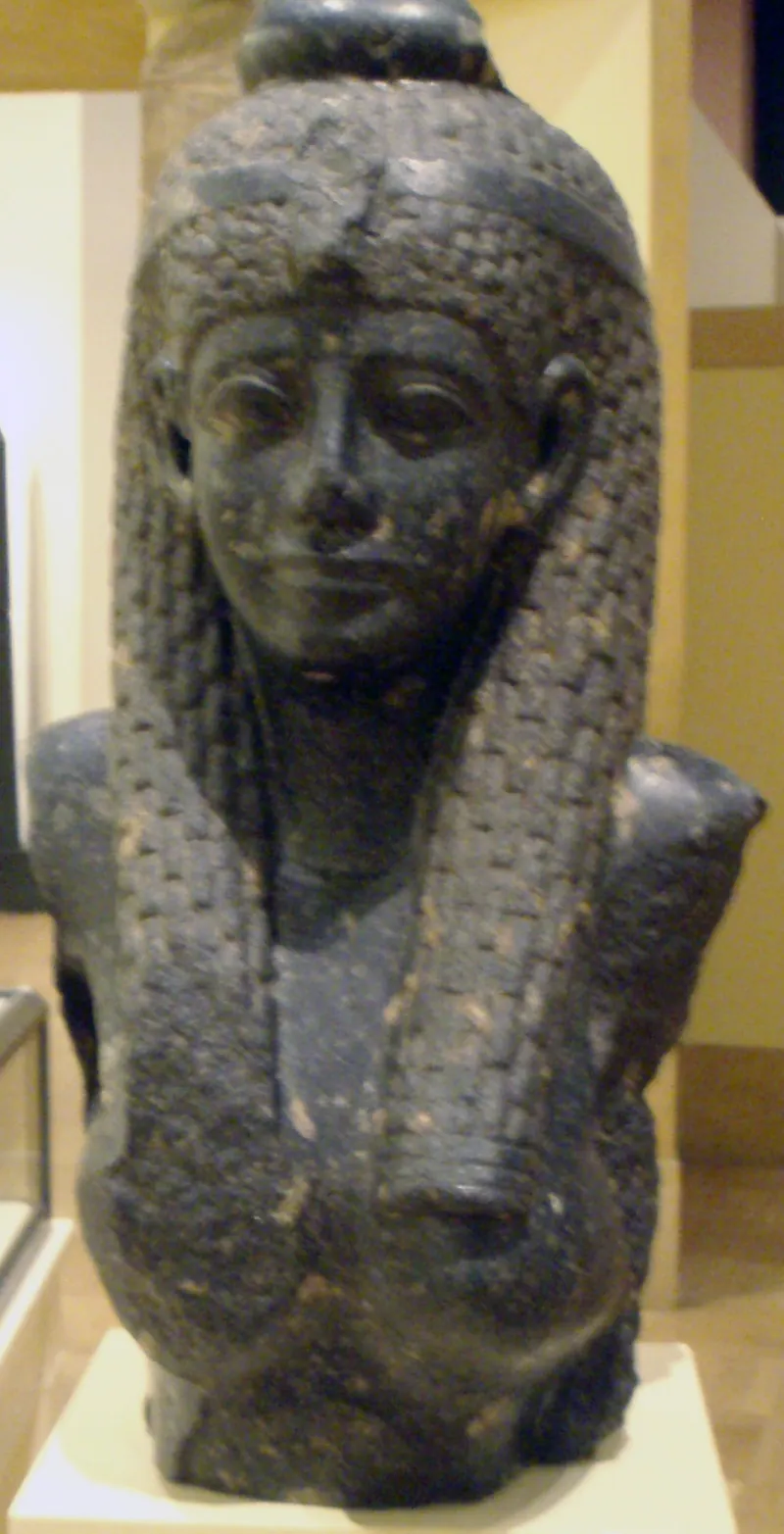
Cleopatra
Cleopatra VII was the last active ruler of Ptolemaic Egypt, a Greek-speaking Macedonian queen who allied with Julius Caesar and Mark Antony and lost her kingdom to Octavian at Actium.
Biology
Human
Human beings are the only living members of the genus Homo: a bipedal primate that originated in Africa about 300,000 years ago, now numbers more than eight billion, and shapes the biosphere through language and cumulative culture.