Cat breeds
Editorially reviewedPersian cat
The long-haired cat of Persia
The long-coated, flat-faced cat of the drawing room: an old breed whose extreme type has put breathing, eyes and breeding at the center of a modern welfare debate.
The Persian is the drawing-room cat of the European imagination: a low, cobby body under a long, flowing coat, a round head, small ears and enormous eyes. The silhouette is unmistakable, and so is the cost of producing it. The breed's history is a story of selection for luxury; its present is a debate about what that selection has done to the cat's ability to breathe, see and give birth.
Origin and the long coat
The name points to Persia, but the documented story begins in Europe. In 1626 the Italian trader Pietro della Valle returned from Persia with a heavily coated longhair distinct from the Turkish Angora, which had reached Europe at about the same time; the two types were later combined to produce a sturdy, short-nosed cat with a dense, silky coat . The first imports reached the United States in the late 1880s, and the Persian was one of the six foundation breeds of the Cat Fanciers' Association in 1906 . CFA now divides the breed into seven color divisions for competition, including the pointed Himalayans .
The early history is thinner than the legend. Longhaired cats reached Europe from several directions, and the modern Persian was assembled by breeders rather than discovered intact; CFA notes that the route to western Europe is not precisely known . The coat, not the country, is the through-line.
The standard and the two faces
The CFA standard describes a round, massive head with great breadth of skull; small, round-tipped ears set low and far apart; large, round eyes; a short, snub, broad nose with a break centered between the eyes; and a cobby body on short, thick legs . The nose should be short, but the nostrils must be "sufficiently open to allow cat to breathe without restriction" . That clause is telling: it writes welfare into the definition of type.
The shape exists on a gradient. The extreme, flat-faced show type is sometimes called "peke-face"; the less extreme, older type is called "doll-face" or "traditional". These are breeder and pet-trade terms, not separate registrations, and the boundary is not policed. A 2021 CT study of 69 Persians found a broad range of skull dimensions, with some individuals overlapping ordinary domestic shorthairs . "Persian" describes a family of types, and some pet Persians are built much more moderately than the show ideal.
Coat care
The coat is the breed's glory and its heaviest practical demand. CFA describes a long, thick coat that stands off from the body, with an immense ruff and a deep frill, and recommends a steel or Teflon-coated comb with long, coarse and fine teeth . Regular, usually daily, combing is the baseline; mats form quickly, especially behind the ears, under the arms and around the hindquarters, and a matted coat is painful rather than merely untidy. Occasional baths are appropriate only after thorough combing and nail clipping . The large eyes may stain and need wiping with a soft, damp cloth . This is a breed for people who enjoy grooming, or who are willing to pay someone who does.
The flat face and its costs
Brachycephaly is the central welfare issue. In the 2021 CT study, increasing grades of brachycephaly in Persians were associated with larger extra-orbital parts of the eyeballs — eyes less protected by bone — a lower naso-osseal aperture, and displacement of the upper premolars . The same paper notes that stenotic nares, elongation of the soft palate and abnormal nasopharyngeal turbinates can obstruct the upper airway, the feline equivalent of brachycephalic obstructive airway syndrome . Not every Persian is severely affected, and the study found wide variation within the breed . But the direction of the effect is consistent: flatter faces carry more risk.
CFA acknowledges the history. It notes that emphasis on refined features once produced cats with smaller-than-average nostrils and breathing problems, and that breeders responded by removing affected cats from breeding programs . That is a real improvement, and it is also a reminder that type can outrun function. Eyes are the second cost: prominent globes are more exposed to drying, injury and staining, hence the regular eye cleaning . Teeth are the third: reduced jaw space crowds the premolars, and the PLOS authors describe malalignment as a consequence of the skull shape . None of this argues against the breed; it argues for moderate cats.
Kidneys, PKD1 and testing
Polycystic kidney disease is the breed's best-known inherited disorder. It is autosomal dominant: one copy of the variant is enough, and affected cats develop kidney cysts that multiply and enlarge until enough tissue is destroyed to cause kidney failure . Cysts are present at birth, clinical signs often appear around seven years of age, and ultrasound is the definitive diagnostic tool .
The conventional cause is a single PKD1 variant, a C>A change on chromosome E3 estimated to account for about 95% of feline PKD . It behaves with nearly complete penetrance in heterozygotes, while homozygotes die as embryos . A DNA test identifies carriers before breeding, and CFA credits testing and neutering of affected cats with bringing the disease under control . The effect is measurable: in a Japanese dataset of more than 61,000 genetically tested cats, the carrier frequency of the PKD1 variant fell by 42.6% between 2019 and 2022, with a 38.8% fall in Persians . A separate study of 108 cats found PKD1 mutations in 19.44%, concentrated in Persian and Persian-related breeds .
The test is not a cure, and it does not predict severity. The usual strategy is to pair a heterozygous cat with a tested clear mate, which prevents affected homozygotes but does not remove the variant from the line.
Heart, birth and other health
Hypertrophic cardiomyopathy, the most common heart disease of cats, is familial in Persians . It is characterized by thickening of the ventricular muscle; many affected cats show no signs, and others develop heart failure or sudden death. Echocardiography can find it before a cat is bred.
Birthing is often assumed to be a brachycephalic problem, but the evidence is not straightforward. In a large insurance-database study, the Persian/Exotic group had a significantly lower recorded incidence of dystocia than the reference population, with an incidence rate ratio of 0.49 . Recorded incidence reflects breeding management and when a veterinarian is called, so it is not proof that flat faces make birth easy. It does suggest that claims that Persians cannot give birth are too simple. Heat and exercise intolerance are better-supported concerns for flat-faced cats, and the usual feline risks of dental disease, obesity and kidney disease apply with age.
Temperament, framed carefully
Breed literature describes the Persian as calm, placid and affectionate. CFA calls the breed "playful yet placid" and "easygoing and mellow", and TICA describes it as gentle and quiet, preferring a calm environment . Those descriptions are averages, not guarantees. A Persian can be playful, anxious, aloof or outgoing; early handling and the individual cat matter more than the label. What it does not tolerate well is chaos: loud households, unpredictable handling and disruptions to routine.
The common claim that Persians are "good with children" should be read carefully. A calm cat may tolerate a gentle child, but a long coat invites pulling and a flat face makes rough handling riskier. Supervision is not a breed-specific rule; it is a basic one. The Persian's real gift is patience, best repaid with a quiet lap and a predictable day.
Breeding, buying and the future
The Persian remains one of the most popular pedigreed cats, and its problems are not mysteries. PKD1 testing, HCM screening and honest breeding records are available; moderate head type is a choice. The difficult question is commercial: extreme kittens can sell, and the show ring has historically rewarded exaggeration. The 2021 brachycephaly study is a reminder that selection for a look can outrun selection for function .
A buyer can do three useful things. Ask for PKD1 results for both parents. Ask what the breeder does about breathing and eye problems in the line. And look at the cat, not the photograph: a Persian that breathes quietly at rest, with open nostrils and clear eyes, is a different animal from one that wheezes on the lap. The breed's future depends on breeders choosing the former, and on owners being willing to pay for health rather than extremity.
The margin
Sources
9 references · checked at publication
- 1Persian
Cat Fanciers' Association · 2026
- 2Persian Breed Standard
Cat Fanciers' Association · 2024
- 3Correlation of brachycephaly grade with level of exophthalmos, reduced airway passages and degree of dental malalignment in Persian cats
PLOS ONE · Sieslack, J. et al. · 2021
- 4Polycystic Kidney Disease
Cornell University College of Veterinary Medicine, Cornell Feline Health Center · 2026
- 5Widespread genetic testing controls inherited polycystic kidney disease while avoiding inbreeding in cats
BMC Genomics · Ukawa, H. et al. · 2026
- 6PKD1 gene mutation and ultrasonographic characterization in cats with renal cysts
F1000Research · Jaturanratsamee, K. et al. · 2024
- 7Hypertrophic Cardiomyopathy in Dogs and Cats
MSD Veterinary Manual · 2024
- 8Dystocia in the cat evaluated using an insurance database
Journal of Feline Medicine and Surgery · Holst, B. S. et al. · 2017
- 9Persian
The International Cat Association · 2026
Image credits
- kitty.green66 · CC BY-SA 2.0 · source
Found a broken link or a claim that needs a better source? Use “Report an issue” above. Last checked October 21, 2026.
Provenance
How this entry was made
- Edition
- Seed edition
- Drafted with
- quanshu-seed-editor
- Prompt version
- seed-v1
- Reviewed
- October 21, 2026
This entry is part of QuanShu’s Animalia. Its claims are tied to the sources above; where the record is uncertain, the text says so. It has been checked against its cited sources and is open to correction. Read the editorial policy.
Continue reading
Related entries
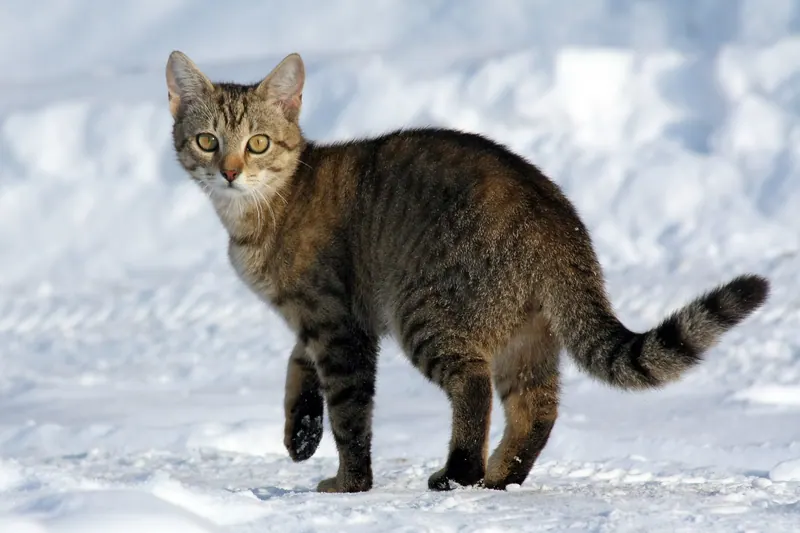
Felidae
Cat
The domestic cat is a small, solitary hunter that chose the human settlement — and then the human sofa. Its story is one of the least intentional domestications in history.
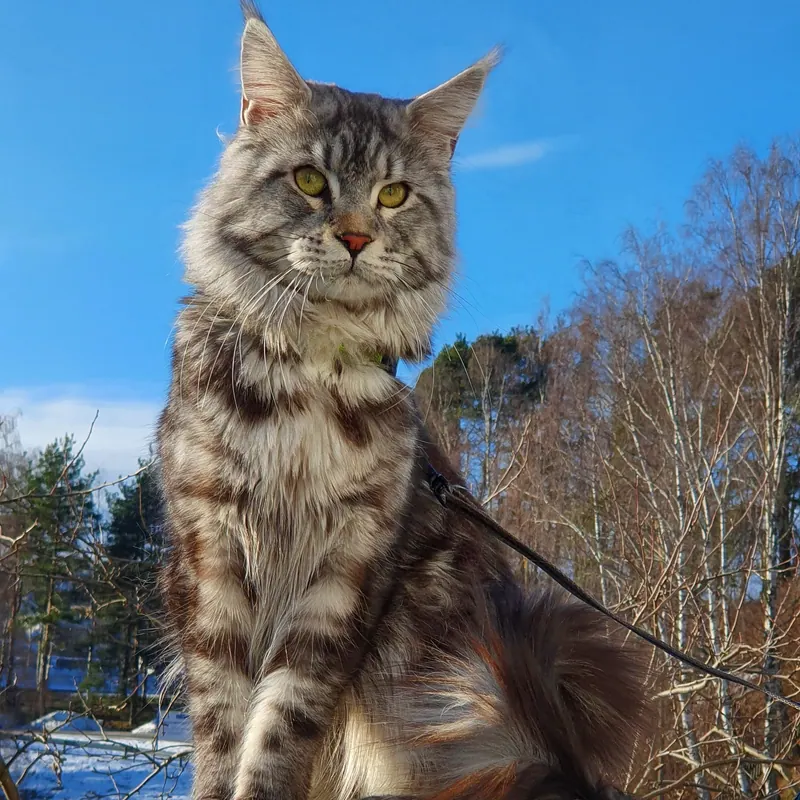
Cat breeds
Maine Coon
The Maine Coon is New England's native longhair: a large, slow-maturing cat with a shaggy coat, a sociable temperament, and inherited heart and joint conditions that breeders screen for.
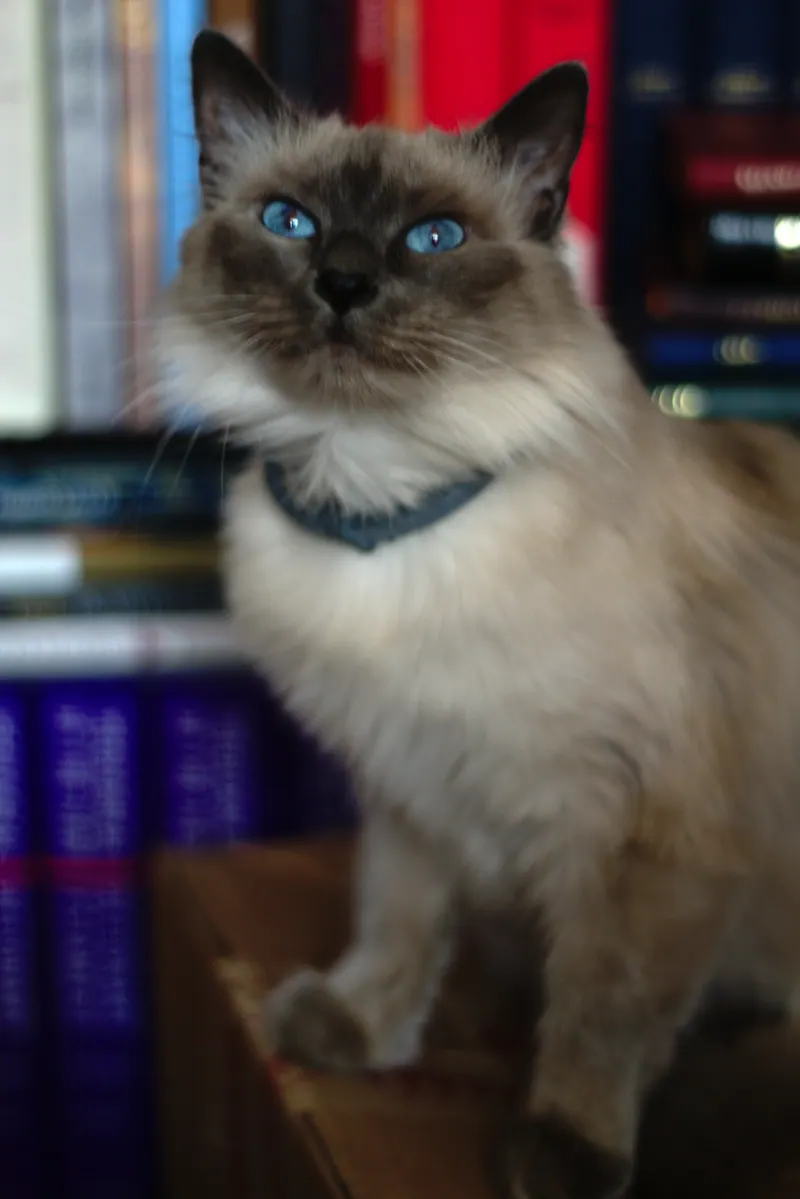
Cat breeds
Siamese cat
A pointed, blue-eyed cat from Thailand, bred to a long wedge and a loud voice — and shaped by a small set of inherited risks that breeders now test for.