Dog breeds
Editorially reviewedBorder Collie
The sheepdog of the border country
The Border Collie is the sheepdog of the Anglo-Scottish border: an intense, biddable herder whose working and show lines have diverged, and whose exercise and health needs are often underestimated.
The Border Collie is the sheepdog of the Anglo-Scottish border, a medium-sized herder built for hill country and long days of work. It is not a large dog, and it is rarely a placid one. Its defining instrument is not its bite but its gaze: a fixed, unblinking stare that stock read as pressure and that handlers call eye.
Two facts complicate the picture. The Border Collie is among the most selectively bred working dogs in the world, and it is also a popular show and companion breed — two careers that have pulled it in different directions .
Name and origins
The name refers to the border country of England, Scotland, and Wales, where hill farmers needed a dog that could gather sheep from ground a person could not easily walk. The word collie is of uncertain origin; suggestions include a Gaelic term and an old word for coal, but none is settled. What is clear is that the dogs were shaped by work rather than by a written standard: selection favored stamina, biddability, and the ability to move stock without panic.
The breed's institutions arrived later than the dogs. The International Sheep Dog Society was founded in 1906 and registers working sheepdogs and Border Collies in a stud book that functions as a working pedigree, not a show record . The Fédération Cynologique Internationale gave the breed definitive recognition in 1977; its standard remains in force . The American Kennel Club admitted the Border Collie to its Herding Group in 1995, nearly ninety years after the ISDS was founded .
Working dogs and show dogs
Border Collie breeding now runs along two overlapping tracks. Working registries such as the ISDS record parentage and trial performance, and many working breeders regard sheepdog trials as the closest available test of the traits that matter: gathering, driving, penning, and reading a flock . Show registries record conformation to a written standard, which describes an ideal outline and movement but cannot measure whether a dog can hold a hillside of ewes .
The populations have diverged in appearance and, to some degree, in breeding goals. Show lines tend to be heavier-coated and more uniform; working lines are often lighter and racier, selected for temperament under pressure. The division is real but not absolute: working-bred dogs appear in show rings, and some show breeders work their dogs. What has changed is the market. A breed that was once almost entirely a farm tool is now often bought as a companion, and demand has not always been matched by suitable homes .
Form and coat
A Border Collie stands about 46 to 56 cm at the shoulder and weighs roughly 14 to 25 kg, with males usually larger than females . The body is slightly longer than tall, muscular but not heavy, with a deep chest, strong loin, and a low, free gait. The head is moderately broad, the muzzle tapering, and the ears semi-erect, carried erect or tipped.
The coat comes in two varieties. The rough coat is medium-length with feathering on the forelegs, chest, and tail; the smooth coat is shorter and coarser. Both are dense, weather-resistant double coats, and both shed. Colour is unusually variable for a herding breed: black and white is the familiar pattern, but red, blue, sable, tricolour, and merle also occur. White markings are common on the face, chest, and feet.
The herding mind
The herding sequence is a compressed hunt. A Border Collie casts out in a wide arc, drops into a crouch, fixes the sheep with its eye, and moves them with small, deliberate pressures rather than a chase. Handlers describe the ideal as power without force. Working breeders select for the instinct, but it is not a finished skill: a young dog must learn distance, pace, and when to stop, and individuals vary widely in how much eye they bring to stock.
The breed's reputation for intelligence is deserved but often overstated. Border Collies excel at tasks that require sustained attention, impulse control, and responsiveness to human signals, and they are fixtures of obedience, agility, and sheepdog trials . Comparative studies find real breed differences in cognition, but those differences depend on the task: in a study of more than 7,000 dogs from 74 breeds, brain size predicted performance on some measures while other cognitive measures varied widely, supporting a domain-specific view rather than a single scale . Popular rankings of breeds by intelligence rest largely on trainer surveys and obedience scores: a shorthand, not a measurement. A Border Collie's quickness is not the same as compatibility with a household.
Exercise, work, and daily life
The Royal Kennel Club, formerly The Kennel Club, puts the Border Collie's exercise requirement at more than two hours a day, and that figure covers physical exercise alone . The deeper requirement is problem-solving: stock work, scent games, agility, obedience, or any structured task with rules and a handler. A dog that is walked for hours but never asked to think may still rearrange the furniture.
This is where popularity becomes a welfare problem. Border Collies are intense, alert, and often reserved with strangers, and they may herd children, bicycles, and cars if not taught an alternative . Early socialization and reward-based training matter, and a working-bred puppy is usually a poor choice for a household without time to train it. Suburban owners who can offer dog sports, a secure field, and several hours of engagement each day do well; owners who want a placid family pet often do not. The breed is not for everyone, and saying so is not a criticism of the dog.
Health
Border Collies are generally hardy, but several inherited conditions are common enough that responsible breeders screen for them. Hip dysplasia, a developmental malformation of the hip joint, is among the most commonly screened; the Orthopedic Foundation for Animals grades radiographs and notes that severity depends partly on environment . The Royal Kennel Club lists hip and elbow scoring, eye examination, hearing testing, and DNA tests for several conditions among its breed health recommendations .
Collie eye anomaly is the best known eye disorder. It is caused by a deletion in the NHEJ1 gene and inherited in an autosomal recessive pattern, and affected dogs may show choroidal hypoplasia or coloboma . Breeders therefore rely on DNA testing and ophthalmological examination. In one study of 103 Norwegian Border Collie puppies, the mutant allele frequency was 6.3 percent and clinical and genetic diagnoses agreed .
Idiopathic epilepsy is a serious concern. A study of 49 affected Border Collies found a high proportion with cluster seizures and status epilepticus, poor response to medication in many cases, and a pattern consistent with a strong genetic founder effect . The MDR1 (ABCB1) deletion, which causes sensitivity to some drugs including ivermectin, is well known in collie-type breeds; homozygous dogs are at risk from ivermectin while carriers are not . Border Collies appear to carry the mutation at low frequency — a large European survey found none in the sampled Border Collies — and testing is included in breed health schemes . None of this is a reason to avoid the breed. It is a reason to ask breeders for test results and to have a veterinarian examine the dog.
Ethics and ownership
The Border Collie's future depends less on its standard than on its supply. Breed clubs and rescue groups rehome working dogs that fail to make the grade, and buyers can ask for health-test results, meet the parents, and see whether the breeder works or shows the dogs — and can walk away from a breeder who cannot explain why a working breed is going to a non-working home.
The breed also raises a wider question. Is it fair to keep an animal selected for a job it will never do? The answer is not a blanket no. Border Collies can live well without sheep if their minds are engaged, and many do. But the burden falls on the owner, not the dog. A Border Collie is not a decoration or a status symbol. It is a working animal with a working animal's needs, and the border country is still the shape of its mind.
The margin
Sources
10 references · checked at publication
- 1Border Collie
American Kennel Club · 2026
- 2Border Collie
The Royal Kennel Club (formerly The Kennel Club) · 2026
- 3The International Sheep Dog Society
International Sheep Dog Society · 2026
- 4Border Collie (297)
Fédération Cynologique Internationale · 2026
- 5Absolute brain size predicts dog breed differences in executive function
Animal Cognition · Horschler, D. J. et al. · 2019
- 6Hip Dysplasia
Orthopedic Foundation for Animals · 2026
- 7Compliance between clinical and genetic diagnosis of choroidal hypoplasia in 103 Norwegian Border Collie puppies
Veterinary Ophthalmology · Grosås, S. et al. · 2018
- 8Epilepsy in Border Collies: clinical manifestation, outcome, and mode of inheritance
Journal of Veterinary Internal Medicine · Hülsmeyer, V. et al. · 2010
- 9Ivermectin sensitivity in collies is associated with a deletion mutation of the mdr1 gene
Pharmacogenetics · Mealey, K. L. et al. · 2001
- 10The prevalence of ABCB1:c.227_230delATAG mutation in affected dog breeds from European countries
Research in Veterinary Science · Firdova, Z. et al. · 2016
Image credits
- Amélie Tsaag Valren · CC BY-SA 4.0 · source
Found a broken link or a claim that needs a better source? Use “Report an issue” above. Last checked October 21, 2026.
Provenance
How this entry was made
- Edition
- Seed edition
- Drafted with
- quanshu-seed-editor
- Prompt version
- seed-v1
- Reviewed
- October 21, 2026
This entry is part of QuanShu’s Animalia. Its claims are tied to the sources above; where the record is uncertain, the text says so. It has been checked against its cited sources and is open to correction. Read the editorial policy.
Continue reading
Related entries
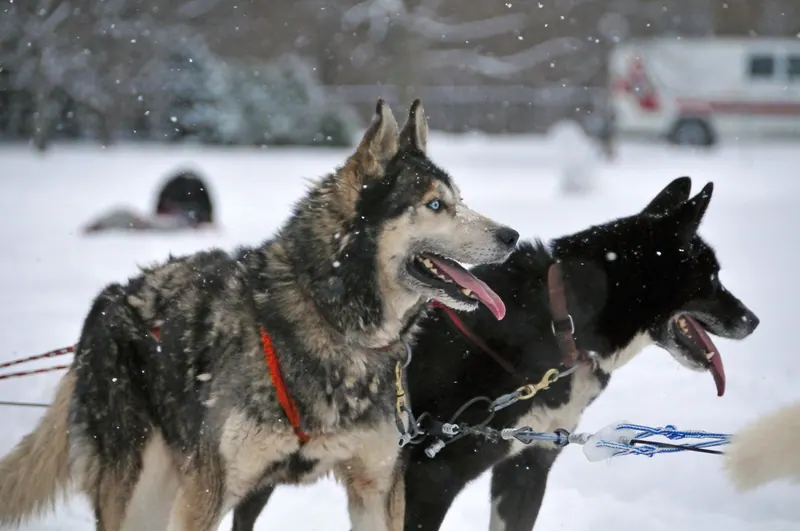
Canidae
Dog
The dog is the domesticated descendant of the gray wolf — the oldest companion species, reshaped by millennia of human selection into hundreds of breeds and spread across every human landscape.
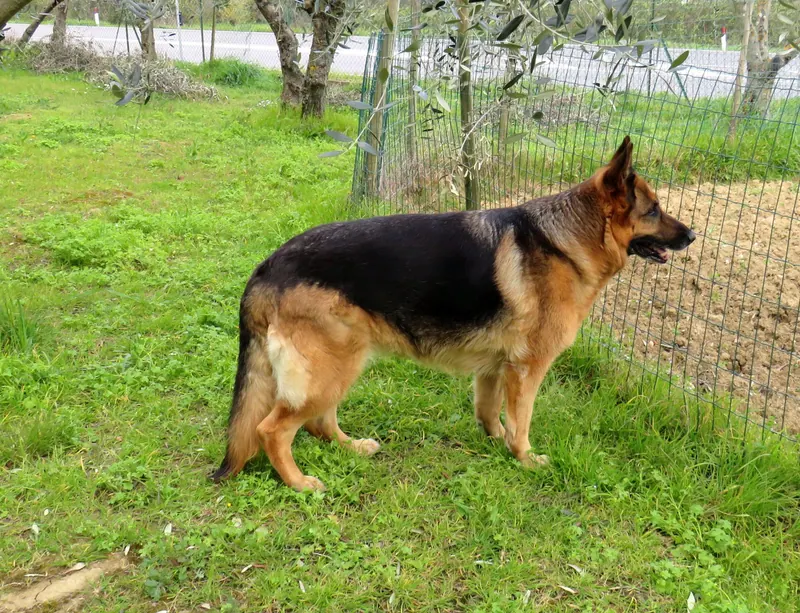
Dog breeds
German Shepherd Dog
The German Shepherd Dog is a large herding breed from Germany, built for work and prized for its trainability — and it needs a job to stay sound in body and mind.
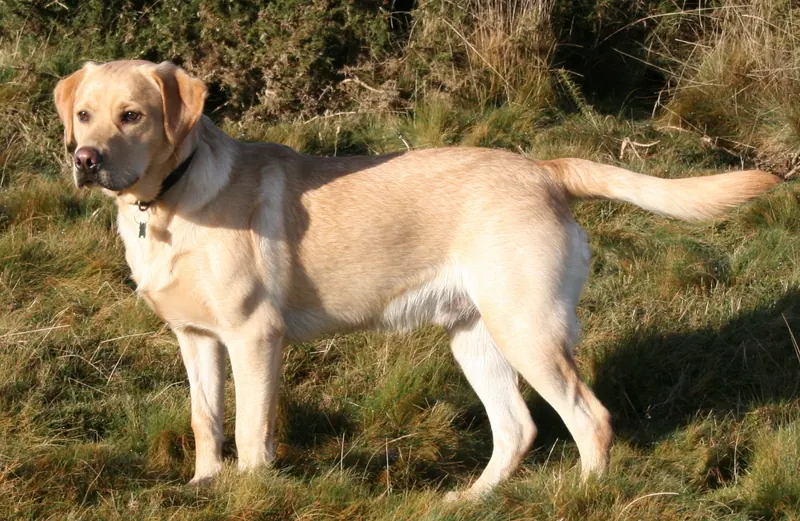
Dog breeds
Labrador Retriever
The Labrador Retriever is a medium-to-large gundog from the North Atlantic, bred to retrieve in cold water and ranked among the most popular breeds in the United States and Britain.